

Robert Charles Powell’s book, “Anton T. Boisen (1876-1965) Cooperative Inquiry: Amid the Complex Entangements of Actual Life, 2nd edition” is the 3rd of an eventual 7 book series on Anton Boisen, considered to be the “father” of the clinical pastoral movement, and CPE (clinical pastoral education).
This book shares similarities with the first two of the series. For one, it is a series of essays or articles written by Powell over a range of years, related to the life of Boisen or the movement he founded. Second, although he is a medical doctor, Powell’s specialization as a historian and researcher shines through with thorough sourcing and prodigious endnotes. Unlike many books, ignoring the endnotes would be missing some of the most interest parts of the book.
On the other hand, Cooperative Inquiry differs considerably in that it is less about the life of Anton Boisen and more a look at how his legacy is lived out in the members of the clinical pastoral movement. Powell is critical of a number of trends he has seen in the movement and compares its modern condition disfavorably with the more innovative start, particularly 1925-1930, by Boisen and others— with special notice to Helen Florence Dunbar.
Reading the book, I think it is understandable if one might wonder if Powell is a conservative idealist— one who has made the early writings and practices of Boisen and others essentially canon for the movement. Personally, I don’t believe this to be his perspective. He desires for the movement to evolve and innovate, but to do so with historical critique. I think he is asking questions, somewhat as on outsider to the movement of whether the torchbearers of today’s clinical pastoral movement have allowed the flame lit by Boisen, Dunbar, and others to dim. This curiosity shows itself in eight broad questions:
“Whatever happened to pastoral social work? to religious diagnosis? to preventive pastoral care? to maintenance, or everyday, pastoral care? to the theology of pastoral care – especially the theology of everyday life? Whatever happened to religious rituals and symbolism? to religious research? to the development of a critical tradition within CPE?” (p. 16)
A challenge that I found as a reader, one that I feel many others are likely to share, is the limited explanation of the context of various essays. I believe a bit of a roadmap of sorts would help greatly. The essays cover almost a 40 year period. The first essay was presented in 1975 to the Association of Clinical Pastoral Education (ACPE). ACPE was an organization first established in 1967 that sought to join two earlier organizations into one, and in so doing combine two traditions. However, by 1975 there was a growing belief that many of the insights from the tradition of Boisen and Dunbar have been set aside with lip service alone to their importance to the movement. The second essay is written not long after the founding of the College of Pastoral Supervision and Psychotherapy (CPSP) as an organization seeking to restore this early tradition to prominence. Later essays focus on CPSP and its covenant in examining its success or failure in living up to its own ideals in a changing ministerial landscape. Since the book is published by CPSP Press, it is not unreasonable to think that the majority of readers would be able to interpret the work within the history of the movement, and be familiar with the Covenant of CPSP. However, for outsiders, or those newer to the movement (of whom I might include myself), some additional guidance would be of benefit.
Overall, this book is a fine continuation of Powell’s series on Anton Boisen and his impact on the clinical pastoral movement. I look forward to the publication of the remaining four books.
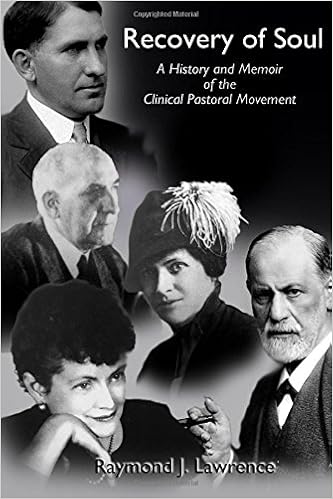 2. One way that language and history has had an effect on the divergence of the CPE movement is in terms of philosophy of learning and supervision. ACPE has traditionally embraced a more Educative focus in line with Cabot’s vision. CPSP has traditionally embraced a more therapeutic focus, in line with Boisen’s vision. For the latter, emphasis is placed on self-understanding and “recovery of the soul” for the trainee, with less emphasis on skills learning. Normally, this would also relate to two philosophies of supervision— patient focus (in line with educative emphasis), and supervisee focus (in line with therapeutic emphasis).
 CPSP-Philippines