Jethro Guidance Center Reunion

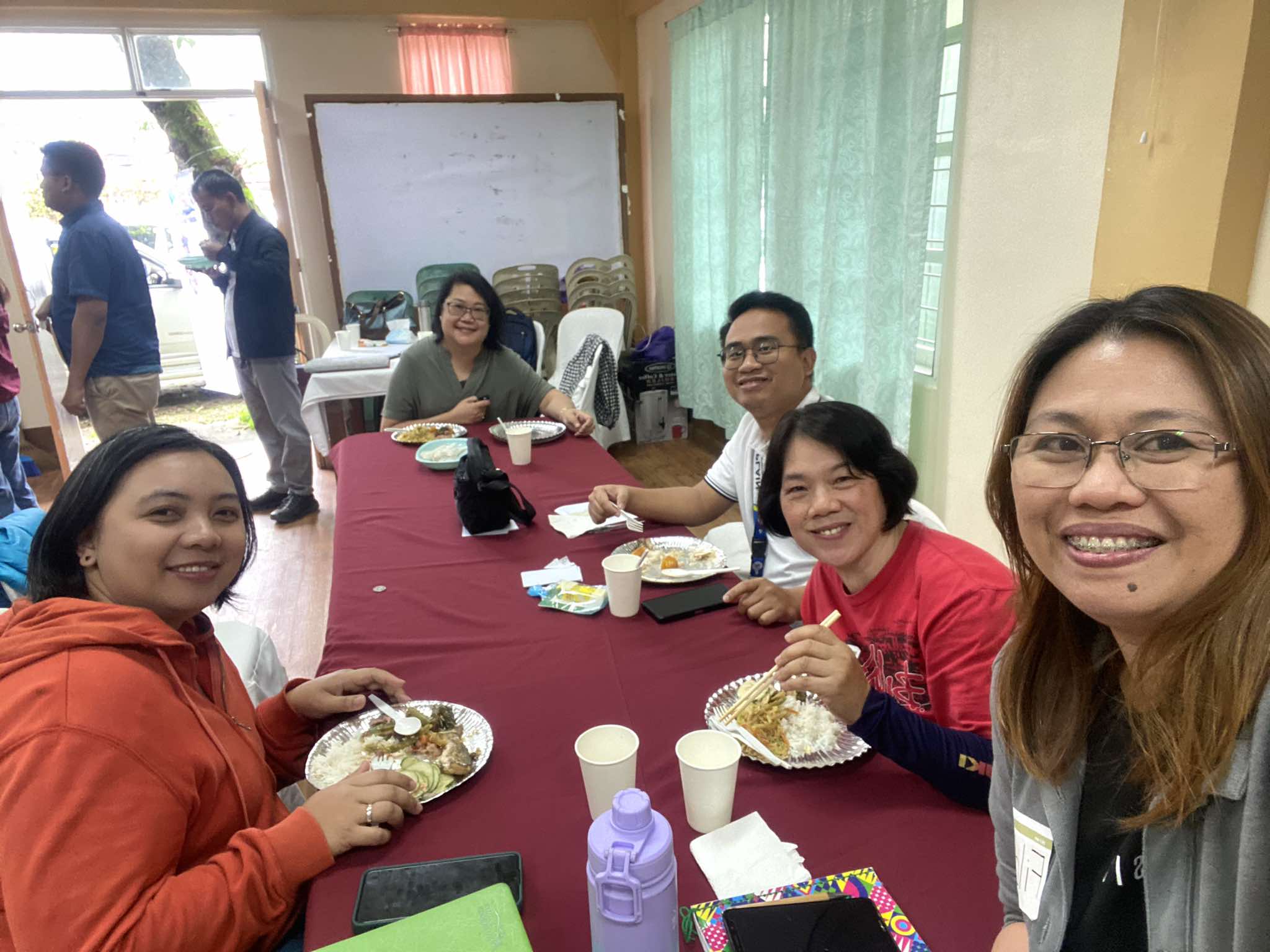
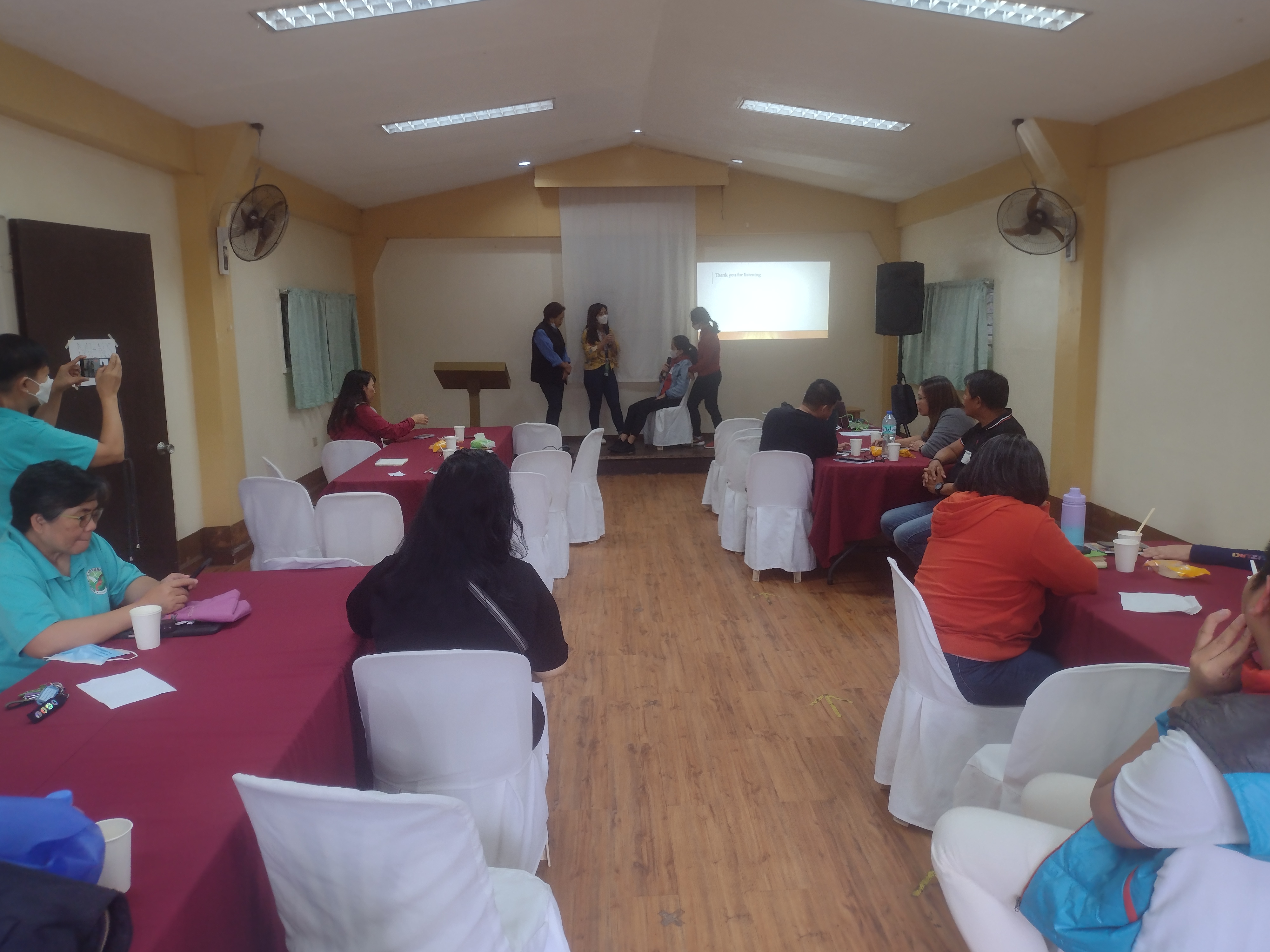
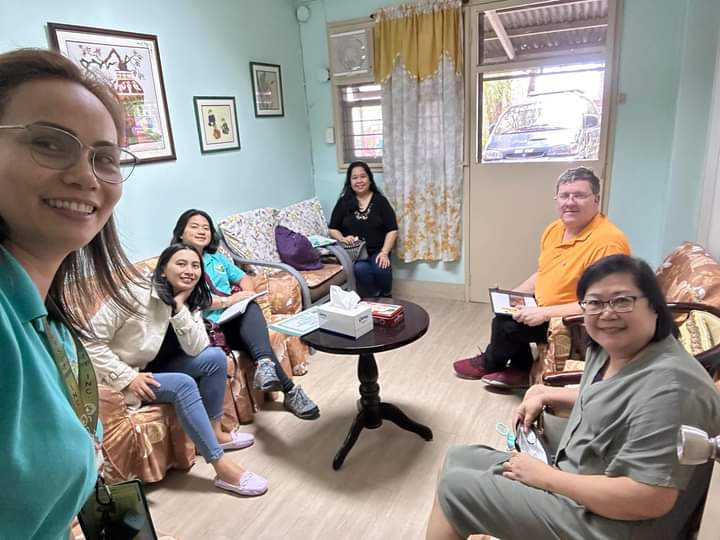
Union Theological Seminary Intensive Summer CPE reunion held during the convocation week Jan 19-24, 2025. Batches 2022 – 2024 were represented with Chap Efren Carreon (SIT cand.), Rev Petz Guerrero, Doc Larry and Prof Carmel Villar serving as Facilitators/Supervisors.

Book Review: “Anton T. Boisen (1876-1965) Cooperative Inquiry: Amid the Complex Entangements of Actual Life, 2nd edition” by Robert Charles Powell

Robert Charles Powell’s book, “Anton T. Boisen (1876-1965) Cooperative Inquiry: Amid the Complex Entangements of Actual Life, 2nd edition” is the 3rd of an eventual 7 book series on Anton Boisen, considered to be the “father” of the clinical pastoral movement, and CPE (clinical pastoral education).

This book shares similarities with the first two of the series. For one, it is a series of essays or articles written by Powell over a range of years, related to the life of Boisen or the movement he founded. Second, although he is a medical doctor, Powell’s specialization as a historian and researcher shines through with thorough sourcing and prodigious endnotes. Unlike many books, ignoring the endnotes would be missing some of the most interest parts of the book.

On the other hand, Cooperative Inquiry differs considerably in that it is less about the life of Anton Boisen and more a look at how his legacy is lived out in the members of the clinical pastoral movement. Powell is critical of a number of trends he has seen in the movement and compares its modern condition disfavorably with the more innovative start, particularly 1925-1930, by Boisen and others— with special notice to Helen Florence Dunbar.

Reading the book, I think it is understandable if one might wonder if Powell is a conservative idealist— one who has made the early writings and practices of Boisen and others essentially canon for the movement. Personally, I don’t believe this to be his perspective. He desires for the movement to evolve and innovate, but to do so with historical critique. I think he is asking questions, somewhat as on outsider to the movement of whether the torchbearers of today’s clinical pastoral movement have allowed the flame lit by Boisen, Dunbar, and others to dim. This curiosity shows itself in eight broad questions:

Whatever happened to pastoral social work? to religious diagnosis? to preventive pastoral care? to maintenance, or everyday, pastoral care? to the theology of pastoral care – especially the theology of everyday life? Whatever happened to religious rituals and symbolism? to religious research? to the development of a critical tradition within CPE?” (p. 16)

A challenge that I found as a reader, one that I feel many others are likely to share, is the limited explanation of the context of various essays. I believe a bit of a roadmap of sorts would help greatly. The essays cover almost a 40 year period. The first essay was presented in 1975 to the Association of Clinical Pastoral Education (ACPE). ACPE was an organization first established in 1967 that sought to join two earlier organizations into one, and in so doing combine two traditions. However, by 1975 there was a growing belief that many of the insights from the tradition of Boisen and Dunbar have been set aside with lip service alone to their importance to the movement. The second essay is written not long after the founding of the College of Pastoral Supervision and Psychotherapy (CPSP) as an organization seeking to restore this early tradition to prominence. Later essays focus on CPSP and its covenant in examining its success or failure in living up to its own ideals in a changing ministerial landscape. Since the book is published by CPSP Press, it is not unreasonable to think that the majority of readers would be able to interpret the work within the history of the movement, and be familiar with the Covenant of CPSP. However, for outsiders, or those newer to the movement (of whom I might include myself), some additional guidance would be of benefit.

Overall, this book is a fine continuation of Powell’s series on Anton Boisen and his impact on the clinical pastoral movement. I look forward to the publication of the remaining four books.

Welcome to 2025!!

It is a brand new year. We get a lot of questions regarding CPE programs that are going on. We try to be of help, but we don’t always know all of the activities of the various groups. With that in mind, you are certainly welcome to contact us on our Contact Us page. However, I do suggest you contact some of the various training centers and find out what they are doing.

Just click on the Training Centers page by CLICKING HERE. It gives our various training centers and points of contact.

Upcoming Trainings starting in January 2025.

We (as in CPSP-PH) don’t always know all of the CPE/T batches coming up, because training centers are autonomous… and busy. But when we do know, we want to update you.

#1. The Chaplain’s Office. Bocaue, Bulacan. Supervisor: Dipl. Renato Eustaquio. Extended CPE (6 month) starting in January.

#2. Bukal Life Care. Baguio City. Dipls. Celia Munson and Vo Canoy. Intensive (and perhaps Extended) CPE batches in Baguio City, and one batch in Palawan. Hospital and Community. If you have questions, email us at bukallife@gmail.com.

#3. Training Center–CDO. Chaplain Elvin Salarda. I can’t find the specific details right now. However, Chaplain Elvin does online CPE. I will try to add more details later. However if you want to know from the source, please email elvin_salarda@yahoo.com.

LIFT Training with KABSAT

Several of our CPE trainees took LIFT training. This is training for ministering with those who are sick, including those in a palliative setting. The training was being held by KABSAT, a ministry partner of ours. We partner with them in ministering at Baguio General Hospital.

Our Bukal team also had a meeting planning for our schedule for 2025. We will share some of our plans in a future post.

Fall Updates

We don’t really have a lot new right now. This is not because things are not happening, but because a lot of the training centers are busy “doing their thing.” Our active groups are as follows:

-Bukal Life Care—- Baguio City. Community and Hospital Chaplaincy

-Glocal Community— Baguio City. Community and Police Chaplaincy

-The Chaplain’s Office— Bocaue. Hospital and Marketplace Chaplaincy

-SATS— Quezon City. Hospital Chaplaincy

-Jethro Guidance Center. Manila/Dasmarinas, Cavite. Community and Hospital Chaplaincy

-Clinical Pastoral and Spiritual Care Training Center— Iloilo City. Hospital Chaplaincy

-Adventist Medical Center— Iligan City. Hospital Chaplaincy

-SPUC CPE Center— Cagayan de Oro. Community Chaplaincy

Some operate year-around (Such as Bukal Life Care and The Chaplain’s Office). Others have on seasons and off seasons. Please either check with them directly or go to the CONTACT US page on this website.

January 2025 we will have our annual board meeting.

March 2025 we (some of us) will attend the CPSP Plenary gathering in Orlando, FL (USA)

June or July 2025 we will have our Centenary celebration (for CPE). More to follow on this one.

Newly Certified Members

From Left to Right: Chaplain Jezza Pingo, Dr. Paul Tabon, Dr. Vic Navarro (on screen), Chaplain Vo Canoy, Chaplain Celia Munson, and Dr. Jun Vestidas

July 31, 2024, CPSP-Philippines held a certification board at Bukal Life Care in Baguio City, Philippines. We would like to congratulate Dr. Jun Vestidas and Ms. Jezza Pingo for passing their respective boards. The board is for a dual certification:

-Board Certified Pastoral Counselor (BCPC)

-Board Certified Clinical Chaplain (BCCC)

The members of the certifying board were Diplomates Paul Tabon (President of CPSP-Philippines), Celia Munson, and Vic Navarro (who joined online). Also participating was Diplomate Vo Canoy, who served as their endorser.

Both Chaplain Jun and Chaplain Jezza have been invited to join our Supervisor-in-Training (SIT) program at Bukal Life Care. Upon completion of the SIT program, the two of them may seek a certification board for Diplomate In Pastoral Supervision.

Corporate Chaplaincy Sub-Specialty

We are in the process of developing sub-specialty “fellowships” in clinical chaplaincy. One that is up and running is “Corporate Chaplaincy.” Sometimes the term “Marketplace Chaplaincy” is also used. Chaplain Renato Eustaquio, DPS serves as a corporate chaplain and is authorized to supervise those who are seeking to be a chaplain in that setting. Chaplain Renato serves in Bocaue, Bulacan. Contact us by our contact page if you have questions.